Design preview · Not the official website
← Home Treatments

Our treatments

The full range of general family dentistry plus cosmetic dentistry, implants, root canal treatment, oral surgery, Invisalign orthodontics and facial aesthetics — from the simplest filling to a complete smile makeover.

General Dentistry
Examination & Diagnosis at Mark Osmond Dental Clinic

Examination & Diagnosis

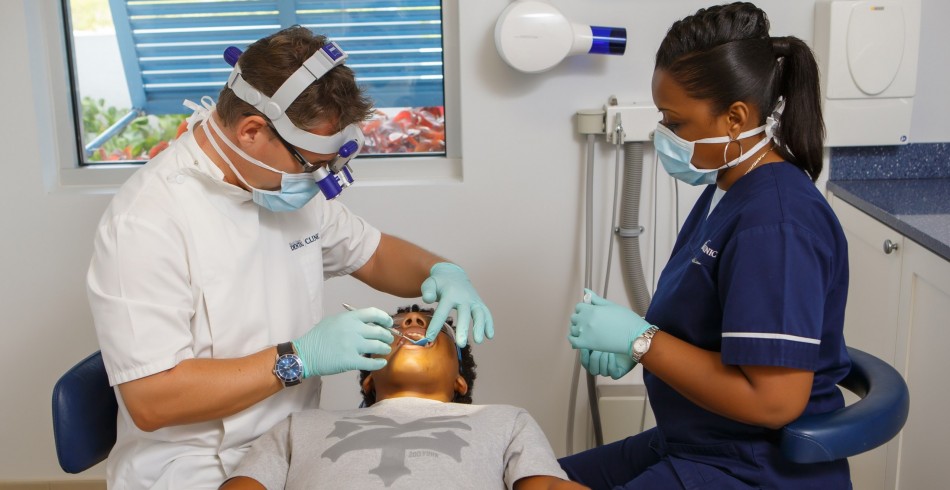
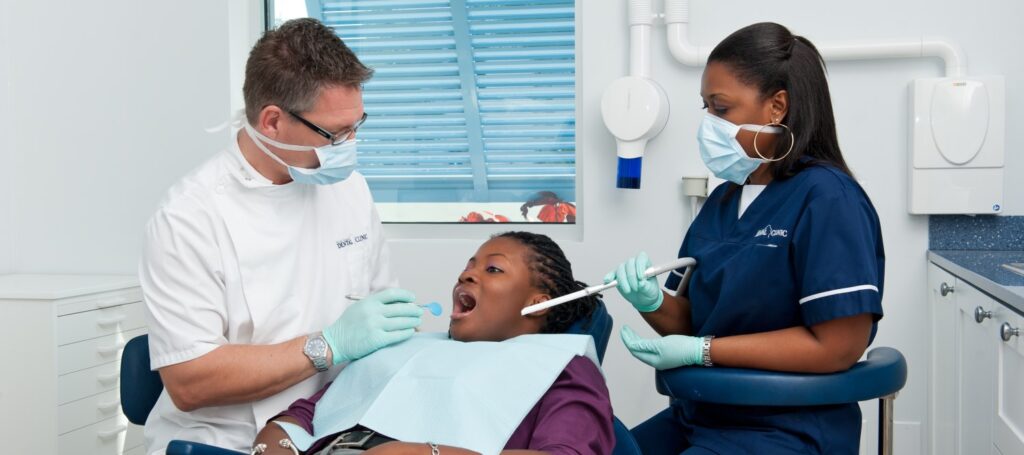
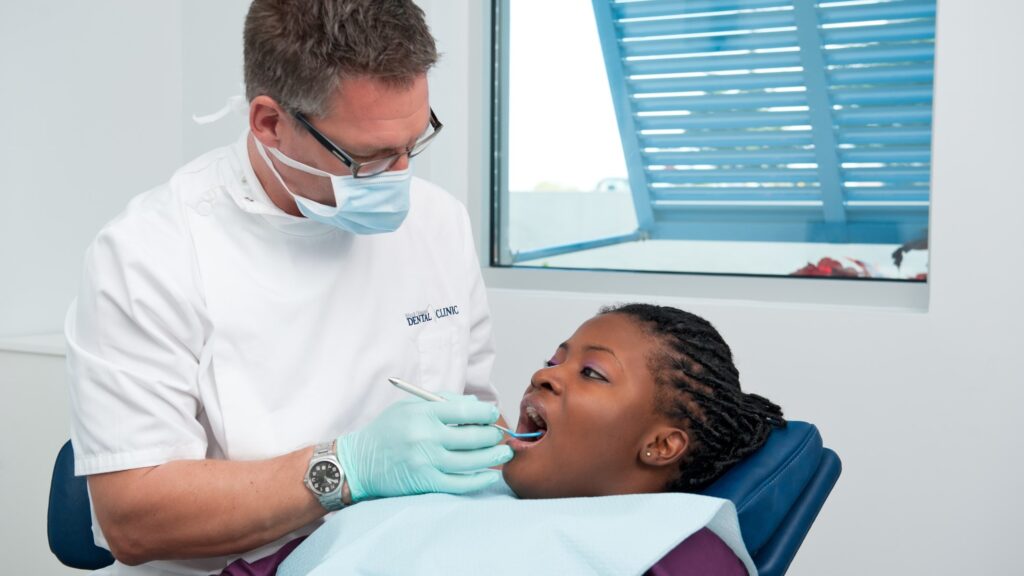
Whether you have come seeking complex surgery or just want a simple cleaning, your first appointment will involve a full dental examination. This will start with a chat about your general health, any medication you are currently being prescribed and whether you have been experiencing any specific dental problems.

Dr Mark will then examine your teeth, gums and the general state of your mouth, and record information on the health of the teeth and gums, noting any fillings, missing teeth, crowns, bridges, implants etc. This is all saved on a computerised dental record that becomes your own, personalised notes.

If any areas are identified as a potential problem, digital radiographs (x-rays) are taken. These reveal areas between and underneath the teeth, fillings and crowns and the condition of the surrounding bone, and so aid diagnosis. Our x-ray equipment is designed to minimise patient exposure.

Your treatment plan

Based on the findings, Dr Mark will discuss any recommended treatment. For more complex cases there is often more than one option, and he will talk through what you want to achieve, any time or budget constraints and the pros and cons of each. You will receive printed treatment plans outlining the number of appointments, the time required and the cost.

You are under no obligation and will not be put under any pressure to go ahead. For complex plans we encourage you to take them home and discuss them before you begin — and we are happy to work around your travel plans. Just let us know!

“I have always found the service to be of the highest quality. The offices are immaculate and the staff are informative, professional and welcoming.”— Patient
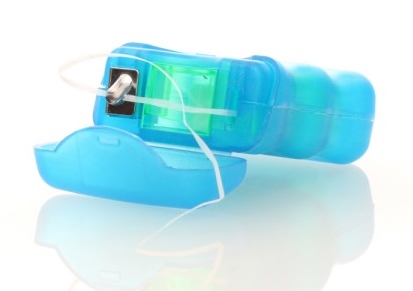
Preventative Care & Hygiene at Mark Osmond Dental Clinic

Preventative Care & Hygiene

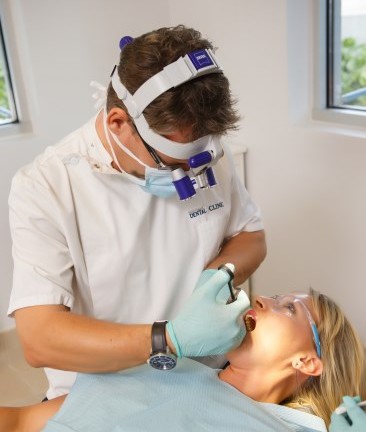
As with other areas of medicine, prevention is better than cure. We advocate that all patients follow a sensible hygiene programme of regular professional cleanings as well as twice-daily cleaning at home.

Hygiene

A professional cleaning (scale and polish) removes calculus — the hard, chalky deposit that brushing alone cannot remove and which, left unchecked, causes decay and gum disease with symptoms such as bleeding, sore gums and bad breath. Surface stains from coffee or red wine are removed too, giving you back a whiter, cleaner smile. A cleaning should not be painful.

Dr Mark personally performs all cleanings himself, so your dentist is inspecting your teeth while cleaning them — and you can have your examination and cleaning in one visit, without swapping chairs.

Fissure sealing

A liquid filling material is used to fill the narrow grooves in the molar teeth and set hard with a curing light, keeping out debris from these hard-to-clean places. It is proven to reduce the risk of decay and is routinely recommended for children around six or seven, when the first adult molars have erupted — and can be useful for some adults.

Education

We provide hand-outs on topics including caring for children's teeth, dental care in pregnancy, dental care for people with diabetes and the basics of brushing and flossing. Dr Mark has written a regular dental column for the TCI Weekly News, welcomes school groups to the clinic for an interactive presentation, and answers questions on his Facebook page. Teachers interested in a visit can call us on (649) 432-3777.

“Dr Osmond treated me with great care and I love the fact that I can have my check-up and cleaning at the same time with the same person. Definitely saves time and money!”— Patient
Tooth-Coloured Fillings at Mark Osmond Dental Clinic

Tooth-Coloured Fillings

Fillings are required when a hole has formed in a tooth, through decay, abrasion or erosion. Decay occurs when sugars and acids attack the enamel; abrasion is wear; and erosion is enamel dissolving from acid — for example from citrus fruit or acid reflux — often leaving sensitive areas near the gum line.

Composite (white) fillings only

At Mark Osmond Dental Clinic we only place composite, tooth-coloured fillings. Metal (amalgam) fillings contain mercury, and Dr Mark has long considered them an old-fashioned and inferior option. Composite fillings contain no mercury, are as strong as metal, are bonded to the tooth and come in a range of shades to match your natural teeth — so they are virtually invisible.

Changing old fillings

Metal fillings can be replaced with composite. This is clinically advisable if a metal filling is breaking down; otherwise it is a personal, cosmetic choice. If metal fillings are smooth, shiny and intact there is no immediate need to change them. During pregnancy metal fillings are not placed or removed unless the risk of leaving one outweighs removing it.

“I had all sorts of fears about what the treatment would involve, but within minutes, not only did Dr. Osmond relieve my fears, but also had repaired my tooth… painlessly!”— Patient
Cosmetic Dentistry
Crowns, Veneers & Bridgework at Mark Osmond Dental Clinic

Crowns, Veneers & Bridgework

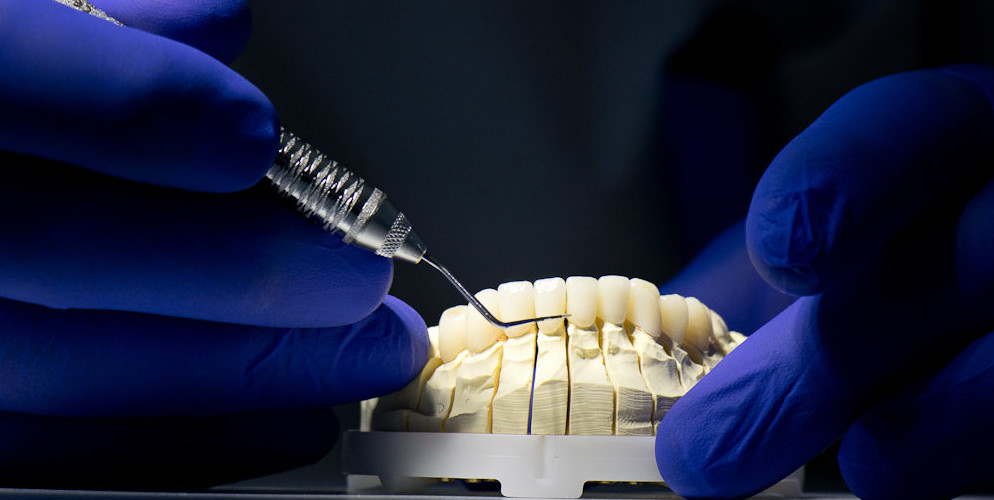
Crowns, veneers and bridges replace missing teeth, restore damaged teeth or improve the appearance of your smile. Dr Mark records your teeth — now with a digital oral scanner instead of messy impressions — and often takes photographs of their shape, colour and position, so the laboratory can create the most natural result.

Veneers

A veneer is a thin porcelain cover bonded to the front surface of a tooth, used to restore chipped or broken teeth or to change their colour, size or shape. After minimal preparation you wear temporary veneers for around 2–3 weeks while the porcelain ones are made. We advise avoiding biting on bones, fingernails or pens with veneered teeth.

Crowns

A crown (or cap) covers the whole tooth above the gum and is suitable for front and back teeth — a more robust solution than a veneer, used for cosmetic and clinical reasons such as a badly decayed tooth with a healthy root. Crowns can be all-porcelain or porcelain over a strengthened core such as zirconium; Dr Mark chooses the best material for your case, and only tooth-coloured porcelain is visible. Gold crowns are also available.

Bridges

A bridge permanently replaces one or more missing teeth by attaching to the neighbouring teeth or implants. Dr Mark prefers to break larger bridges into smaller units for strength and stability, using implants where needed to reduce long spans. The result is indistinguishable from your natural teeth.

“Love my ‘new tooth’… Have been wanting to get it fixed for 15+ years – nice to not see that ugly black when I smile now. It looks great!”— Patient
Dental Implants at Mark Osmond Dental Clinic

Dental Implants

Dental implants are the most technologically advanced and closest-to-nature way to replace a missing tooth or teeth. Dr Mark first trained in implant dentistry in the US, completed follow-up courses in the UK and France, and both places and restores implants himself using the Nobel Biocare system — one of the largest and most established in the world.

How implants work

An implant is a titanium, screw-like fixture secured into the jaw bone to replace the root of a natural tooth. Bone fuses with titanium, fixing the implant firmly and permanently; a porcelain crown is then attached that looks like a natural tooth. Two or more implants can carry a bridge, a combination can replace a whole arch, and implants can also anchor dentures so they clip securely in place.

The procedure

Placing a single implant generally takes less than an hour and is no more painful than routine treatment. After a healing period of 8–12 weeks the implant is restored with its crown. Unlike a bridge, neighbouring teeth are left untouched; an implant looks and feels like your own tooth, is cleaned the same way, and with sensible care can last a lifetime.

“Dr Mark has given me implants and crowns which were perfect every time. He is incredibly skilled and takes great care to provide a pain-free experience.”— Jan S, Provo & Chicago
Teeth Whitening at Mark Osmond Dental Clinic

Teeth Whitening

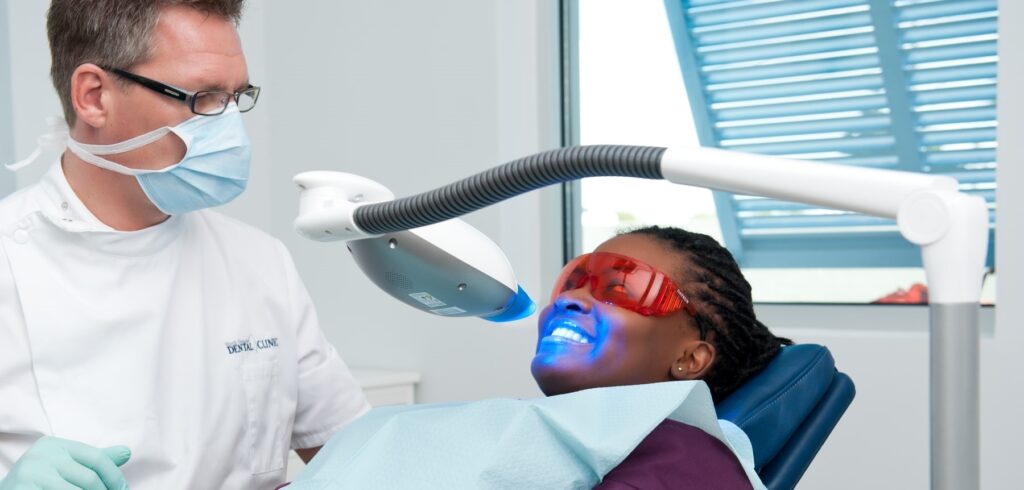
Dental whitening is a cosmetic procedure that uses hydrogen peroxide to give a brighter, whiter smile. Ageing, food and drink, smoking and even grinding can discolour teeth. Surface stains are removed by brushing and professional cleaning, but stains within the tooth need whitening.

In-office whitening

Takes about an hour. Your lips and gums are protected, the professional-strength gel is painted on and activated with a special light, and topped up after around 15 minutes for one or two further rounds. You'll see an immediate, significant colour change at that first appointment. Avoid strongly coloured food and drink for 3 days afterwards.

Professional home kits

A lower concentration gel in pre-loaded trays worn for an hour a day, giving gradual results over several days. Recommended if you have sensitive teeth.

Whitening does not damage teeth. We don't recommend higher concentrations for sensitive teeth or anyone under 20, and existing crowns, veneers and fillings will not change colour.

Invisalign Orthodontics
Invisalign — How It Works at Mark Osmond Dental Clinic

Invisalign — How It Works

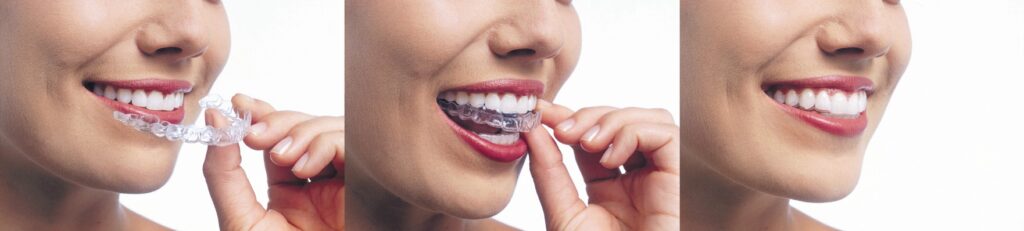
Instead of metal brackets and wires, Invisalign uses a series of clear, removable aligners that gradually move your teeth into the desired position.

Your treatment

Dr Mark takes orthodontic records — digital scans, photographs and x-rays — and discusses what you want to achieve. Invisalign then creates a custom 3D model showing your teeth before, during and after treatment, so you see the end result before you commit.

Aligners are worn day and night and only removed to eat and brush. Every 2 weeks you move to the next set, with a check-up with Dr Mark every 6 weeks. When treatment is complete, night-time retainers keep your teeth in place.

The benefits

You see your result before you start; the clear aligners are hardly noticeable; and because they're removable you can brush and floss as normal, avoiding the hygiene problems that fixed braces can cause.

Conditions Treated

Some of the main conditions Invisalign can correct — the list is not exhaustive.

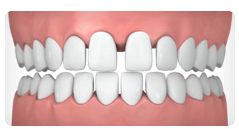
Gapped teeth
Gapped teethGaps can come from continued jaw growth or missing teeth letting others shift. Spacing can lead to gum problems and increased risk of periodontal disease.
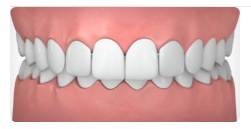
Overbite
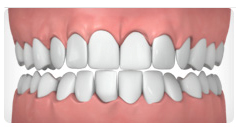
OverbiteThe upper teeth bite over the lower teeth — often genetic or from habits. Can cause gum irritation, wear on the lower teeth and jaw pain.
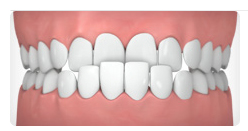
Underbite
UnderbiteThe lower teeth protrude past the front teeth, from jaw growth differences or missing upper teeth. Can cause tooth wear and jaw problems.
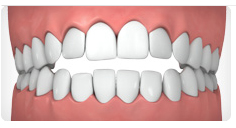
Open bite
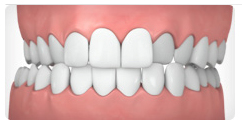
Open biteSome teeth can't meet their opposing teeth — often from jaw structure or thumb-sucking. Can cause poor chewing, speech issues and TMJ problems.
Crowding
CrowdingNot enough room in the jaw for all teeth. Crowding worsens over time and leads to plaque build-up, decay and gum disease.
Crossbite
CrossbiteUpper and lower jaws are misaligned so upper teeth bite inside the lower ones. Can cause tooth wear, gum disease and bone loss.

Invisalign FAQs

How often do I need to wear my aligners?

Aligners are worn every day throughout treatment — at least 22 hours a day, only removed for eating, drinking, brushing and flossing.

Will Invisalign affect my speech?

Some people have a slight lisp for a day or two, which disappears as you get used to the aligners.

What age is Invisalign suitable for?

Invisalign Teen is designed for teenagers from around 12–14 years; Dr Mark can advise on suitability. The general programme suits adults of any age.

How long does treatment take?

It depends on the complexity of the case, but many take around 12–18 months and some as little as 7 months — often less than traditional braces.

Is there any pain?

There may be a little discomfort on the first day of a new aligner, which generally subsides within 12–24 hours.

What if I lose or break an aligner?

Call the clinic. Dr Mark will advise you to move to the next aligner or go back to the previous one, and a replacement will be ordered at no cost.

How much does Invisalign cost?

A full course has a fixed price that covers the entire treatment — however many aligners and visits are needed — including retainers, and can be split into 2 or 3 payments. Please call for current pricing.

Does insurance cover Invisalign?

Check with your provider. In general, if you have orthodontic coverage, Invisalign is covered to the same extent as braces.

Does Invisalign really work?

Yes. Millions of patients worldwide have been treated with Invisalign, which was developed with orthodontists.

Dental Services
Dentures at Mark Osmond Dental Clinic

Dentures

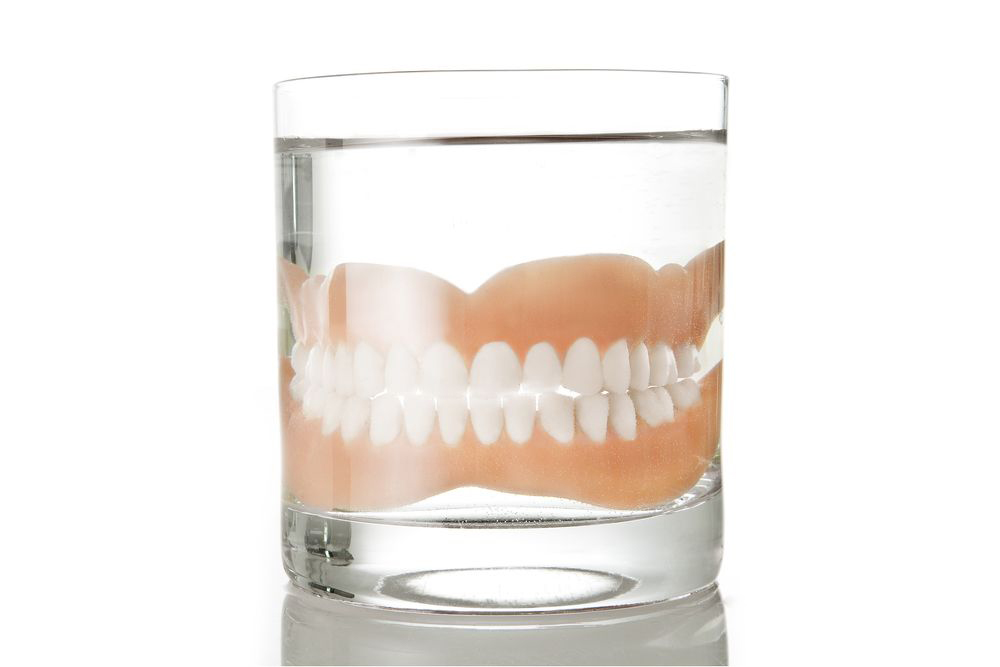
Dentures are removable devices that replace one, several or all of your teeth, and may be the best alternative where implants or a bridge are not viable — for example after significant bone loss, when remaining teeth are failing, or on a limited budget.

Single-tooth denture

A simple acrylic “flipper” denture, often used to replace a single front tooth or as a temporary solution while a bridge or implant is made — a cost-effective alternative to a gap.

Partial dentures

Replace multiple missing teeth with clasps to hold them firmly. A cast metal framework is stronger and thinner than acrylic-only, sits more securely and is less likely to rub.

Full dentures

For patients with no teeth, replacing both the teeth and the lost bone and gum. Upper dentures hold well by suction; lower ones can move more — and if that's a problem, implants can be placed so the denture clips firmly in place.

Children's Dentistry at Mark Osmond Dental Clinic

Children's Dentistry

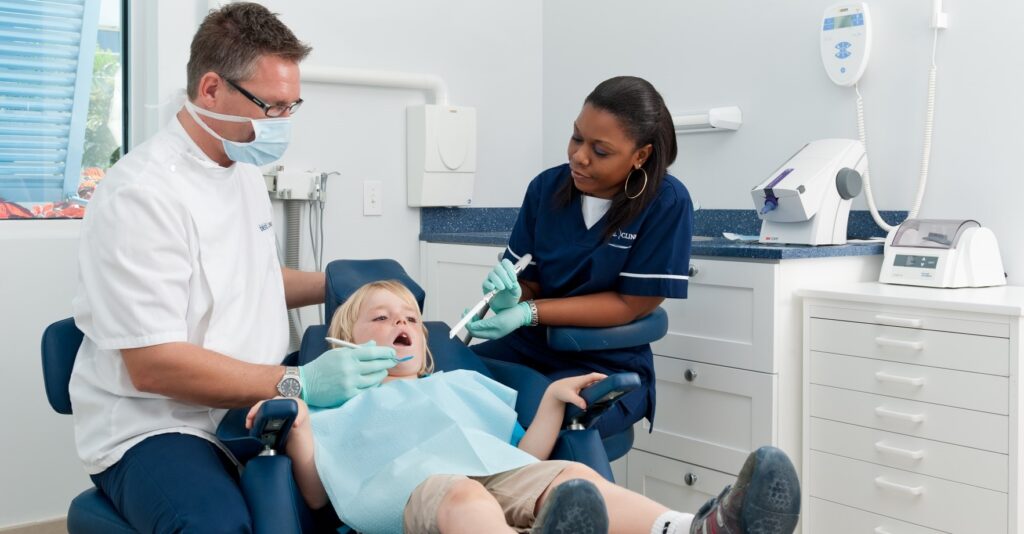
Dr Mark has treated children throughout his career. The key to a successful visit is a child who feels happy and relaxed — ideally from growing up seeing their parents visit the dentist regularly. Even when just accompanying a parent, they can have a ride in the “rocket chair”!

Child examination & polish — $35 · Twins: 2 for the price of 1

When to come and what to expect

We recommend a first visit at around 18–24 months — or immediately after any trauma to the teeth, whatever the age. We check that teeth are coming through correctly and that teeth and gums are healthy, and discuss thumb-sucking, pacifiers and diet. Check-ups are recommended every 6 months, and every good patient gets a sticker!

Fissure sealing

Recommended around age 6–7, when the first adult molars have erupted, to protect the grooves of the back teeth from decay.

How parents can help

  • Let your child see you visiting the dentist regularly
  • Talk about the dentist in a positive way
  • Brush their teeth twice a day
  • Read books about going to the dentist together

Special needs

Dr Mark has experience with children with special needs. When booking, please let us know how we can make the visit as easy as possible.

Dental accidents: if your child has bumped or damaged their teeth, call us immediately on (649) 432-3777 — swift action can make the difference between saving and losing a tooth.

“Thank you Dr. Osmond. Because of you my 8yr old son is no longer afraid of the Dentist!”— Parent
Root Canal Treatment at Mark Osmond Dental Clinic

Root Canal Treatment

Dr Mark is experienced in endodontic treatment and performs all root canal treatments himself. In line with international standards, a new set of endodontic instruments is used for each patient and reserved for your future use only.

When is it needed?

Root canal treatment saves a tooth badly damaged by infection or trauma. Signs can include pain, prolonged sensitivity to hot or cold, discolouration, swelling, tender gums or a bad taste — though there may be no symptoms at all.

What happens

Under local anaesthetic, the infected nerve and pulp are removed and the tooth is cleaned and temporarily sealed. About 1–2 weeks later the canal is permanently filled. Without treatment, infection can lead to an abscess, bone loss and loss of the tooth. Root-filled teeth are often crowned afterwards, as they become more brittle.

Oral Surgery at Mark Osmond Dental Clinic

Oral Surgery

Dr Mark routinely performs many oral surgery procedures at the clinic, either as stand-alone treatments or as part of a wider plan:

  • Routine extractions — straightforward removal of teeth, usually due to decay or gum disease
  • Surgical extractions — for example where only the root remains
  • Wisdom teeth extractions
  • Bone grafts — often after an extraction when implants are planned; we also use a collagen socket pack to aid healing
  • Orthodontic extractions — to allow orthodontic treatment to proceed
  • Gum / periodontal surgery — to reduce pocket depth
  • Crown lengthening — for restorative or cosmetic reasons
“I saw Dr Osmond after I saw a dentist in Miami who was unable to perform the complex surgery I needed. Dr Osmond was able to successfully treat me. He’s really good and very gentle.”— Patient
Emergency Care at Mark Osmond Dental Clinic

Emergency Care

Out-of-hours emergency: (649) 432-3777

Whether you live on the islands or are just visiting, unforeseen events can happen that need immediate help. During clinic hours we will see you as soon as possible between booked appointments — please call or come straight to the clinic.

Outside clinic hours Dr Mark is on call and can assist you rapidly. Call (649) 432-3777 first and we will advise on immediate action and arrange your appointment.

Aesthetic Services
Botox, Dysport & Xeomin at Mark Osmond Dental Clinic

Botox, Dysport & Xeomin

Botox, Dysport and Xeomin are neurotoxins injected into specific muscles, relaxing them to reduce or eliminate lines and wrinkles.

Facial injections are a well-established cosmetic treatment, and increasingly offered by dentists in the US, Canada and UK — a dentist injects every day and has a deep understanding of facial anatomy. Dr Mark qualified to perform these procedures in New York and is a member of the American Academy of Facial Cosmetics.

Frequently asked questions

What is the difference between Botox/Dysport and dermal fillers?

Botox and Dysport treat active lines — those that appear when you move your face — by relaxing the muscles, most commonly on the forehead, crow’s feet and between the brows. Dermal fillers treat passive lines visible when the face is relaxed, adding volume to plump, lift and smooth the skin, usually in the lower two-thirds of the face.

What is the difference between Botox and Dysport?

They are very similar products from different suppliers with identical results. Dysport works slightly faster (initial changes within 24 hours, full results within 5 days) versus Botox (generally 3–5 days, sometimes up to 14).

Is it safe?

Sourced from a reputable supplier, the safety profile is very good. Botox has been used for over 20 years on millions of people and is FDA approved.

How many injections, and how long does it take?

It depends on the area: on average 5 injections for the forehead, 3 per side for crow’s feet and 5 for the glabella. Treating all three takes around 30–40 minutes.

How long does it last?

On average 3–5 months.

Is any down time required?

No — normal activity can resume immediately.

Will it hurt?

It is considered relatively painless — a sensation like a pinch or scratch, similar to having your eyebrows plucked.

Will I bruise or swell?

The needles are very fine, so there is no or only minimal bruising.

Will I still be able to move my face?

Yes. Injections are placed strategically to reduce wrinkles while keeping natural expression.

How much will it cost?

Treatment is priced per unit and depends on the areas treated. Prices are comparable with reputable US clinics and all products come from reputable US or UK suppliers. Please call for current pricing.

“The transformation wasn’t just cosmetic but gave me huge amounts of self confidence too: gone was my permanent frown that made everyone think I was always cross!”— Patient
Facial Fillers at Mark Osmond Dental Clinic

Facial Fillers

Facial (dermal) fillers add volume to areas of the face, lifting, plumping and smoothing the skin to reduce lines and wrinkles. They can be used alone or combined with Botox, Dysport or Xeomin.

Dr Mark qualified to perform facial injection procedures in New York and is a member of the American Academy of Facial Cosmetics.

Frequently asked questions

Which fillers are used?

We use the main fillers including Restylane, Juvederm, Radiesse and Perlane. Some suit deeper injection, others finer lines; Dr Mark will recommend the most suitable product or combination.

Is it safe?

Yes. The chance of an adverse reaction is less than 1%.

How long does the procedure take?

The number of injections depends on the area treated; a procedure generally takes 30–60 minutes.

How long does it last?

On average around 6 months. With repeated treatments the interval can increase to 9–12 months.

Is any down time required?

No, but avoid massaging or pressing on the face for the rest of the day.

How soon will I see results?

Immediately.

Will it hurt?

A numbing cream is applied for 15 minutes beforehand and the filler contains anaesthetic. You’ll feel a small scratch with each injection — generally considered relatively pain-free.

Will I bruise or swell?

A little swelling or bruising can occur; lips usually swell slightly at first, which an ice-pack helps.

How much will it cost?

Fillers are priced per syringe depending on the product used, comparable with reputable US clinics. Please call for current pricing.